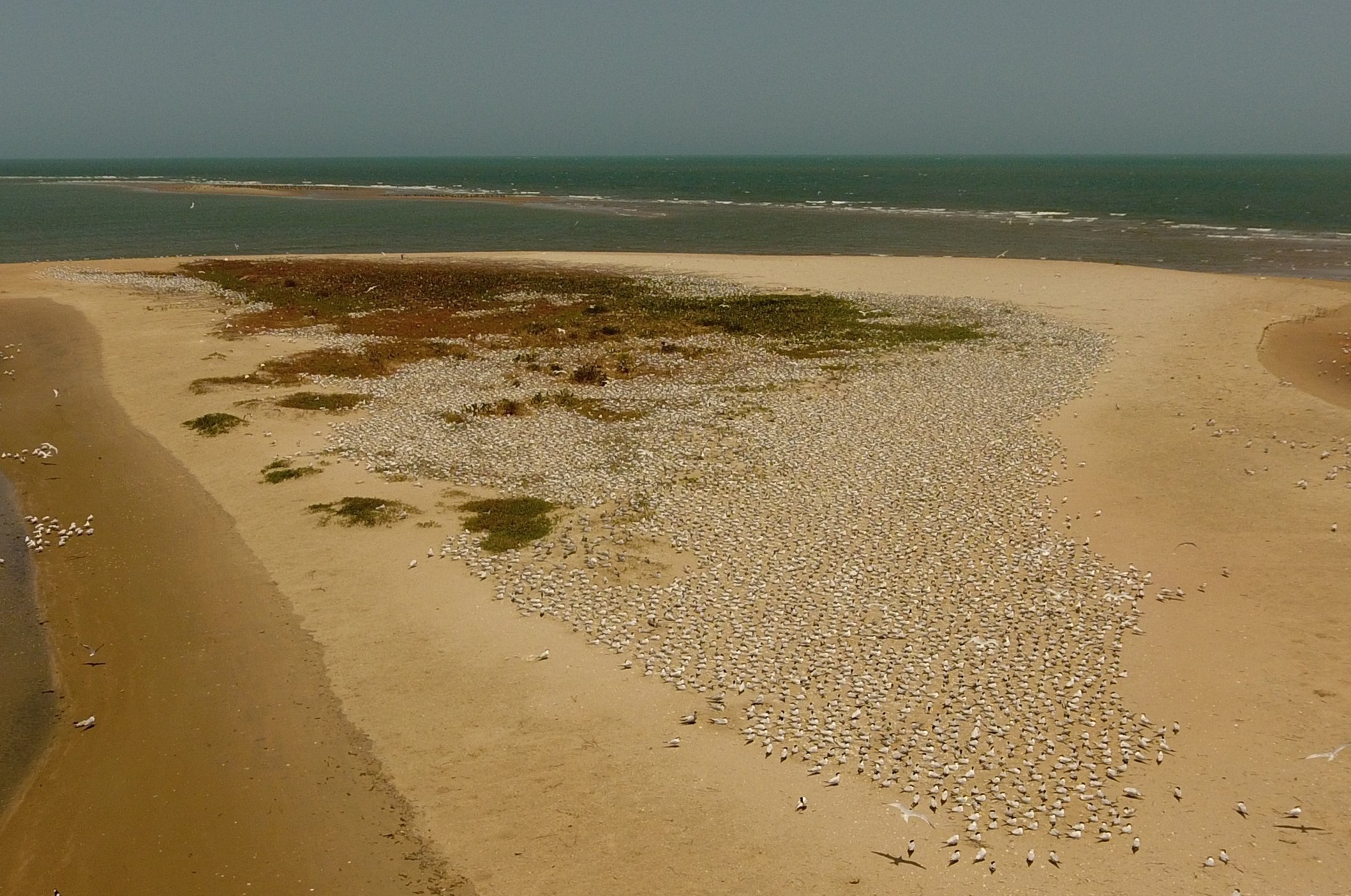
Throughout our careers we have been involved in monitoring seabird colonies and developing efficient, low-disturbance survey techniques. Our pioneering work in the mid-2010s using drones demonstrated that aerial mapping provided a powerful alternative to ground-based methods — though image analysis remained highly time-consuming. We began developing automated counting methods for surveys of large seabird colonies in Western Africa and have since expanded this work to other regions.1
The recent avian influenza outbreaks have severely impacted seabird colonies worldwide, creating an urgent need to survey colonies remotely — with minimal disturbance — to assess mortality. To make this capability genuinely accessible to field practitioners, we recognised the need to move beyond research tools toward a practical application.
Together with the Dutch Centre for Field Ornithology (Sovon), we took on this challenge: extending our seabird detection models to include automated identification of dead birds and building a user-friendly platform — AI-BIRD. Users can upload drone imagery to the cloud, where photogrammetric processing produces orthorectified maps that are then automatically analysed for the presence of dead and living birds. Results are presented through an interactive data portal, where users can review automated detections and make manual revisions where needed.
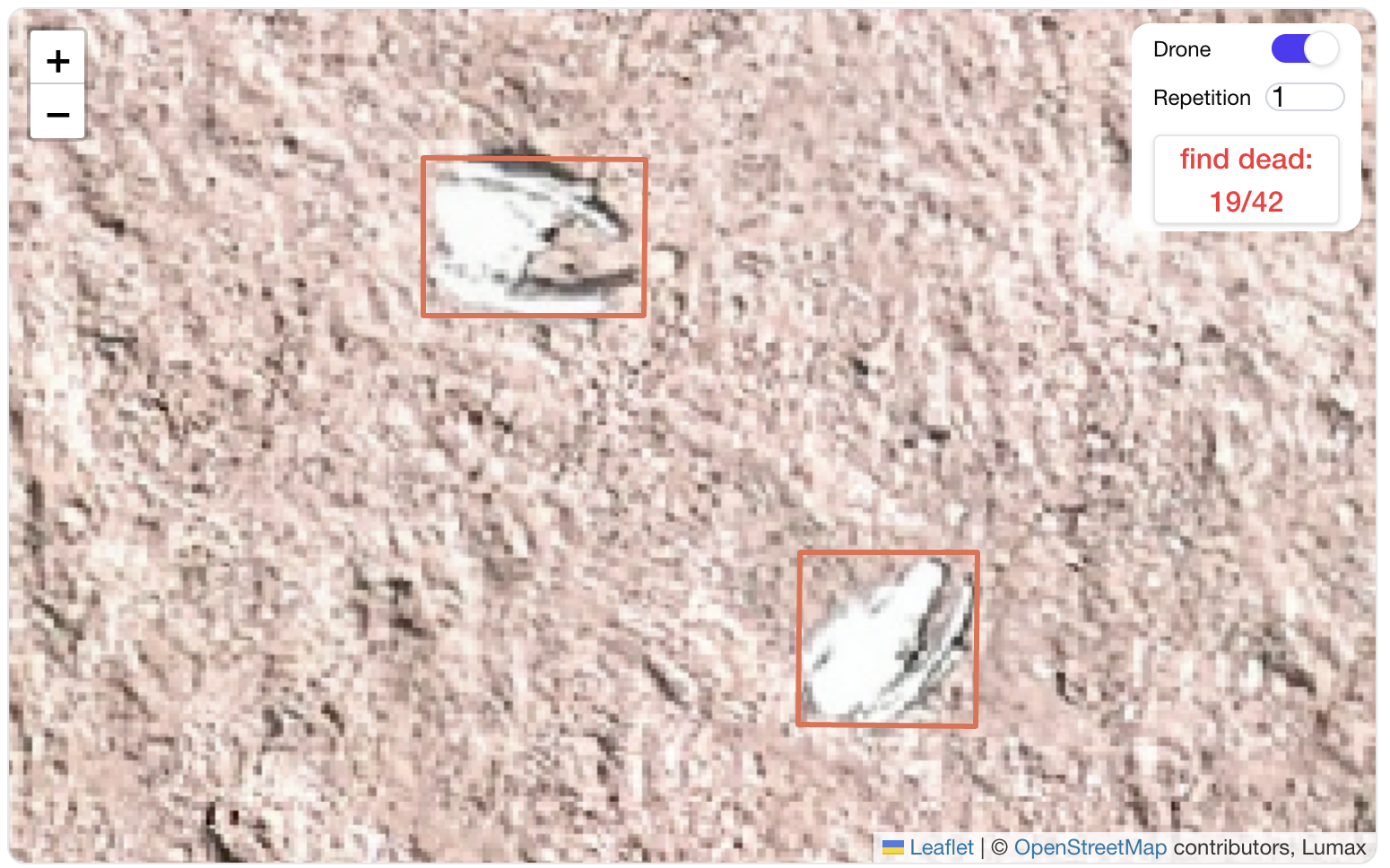
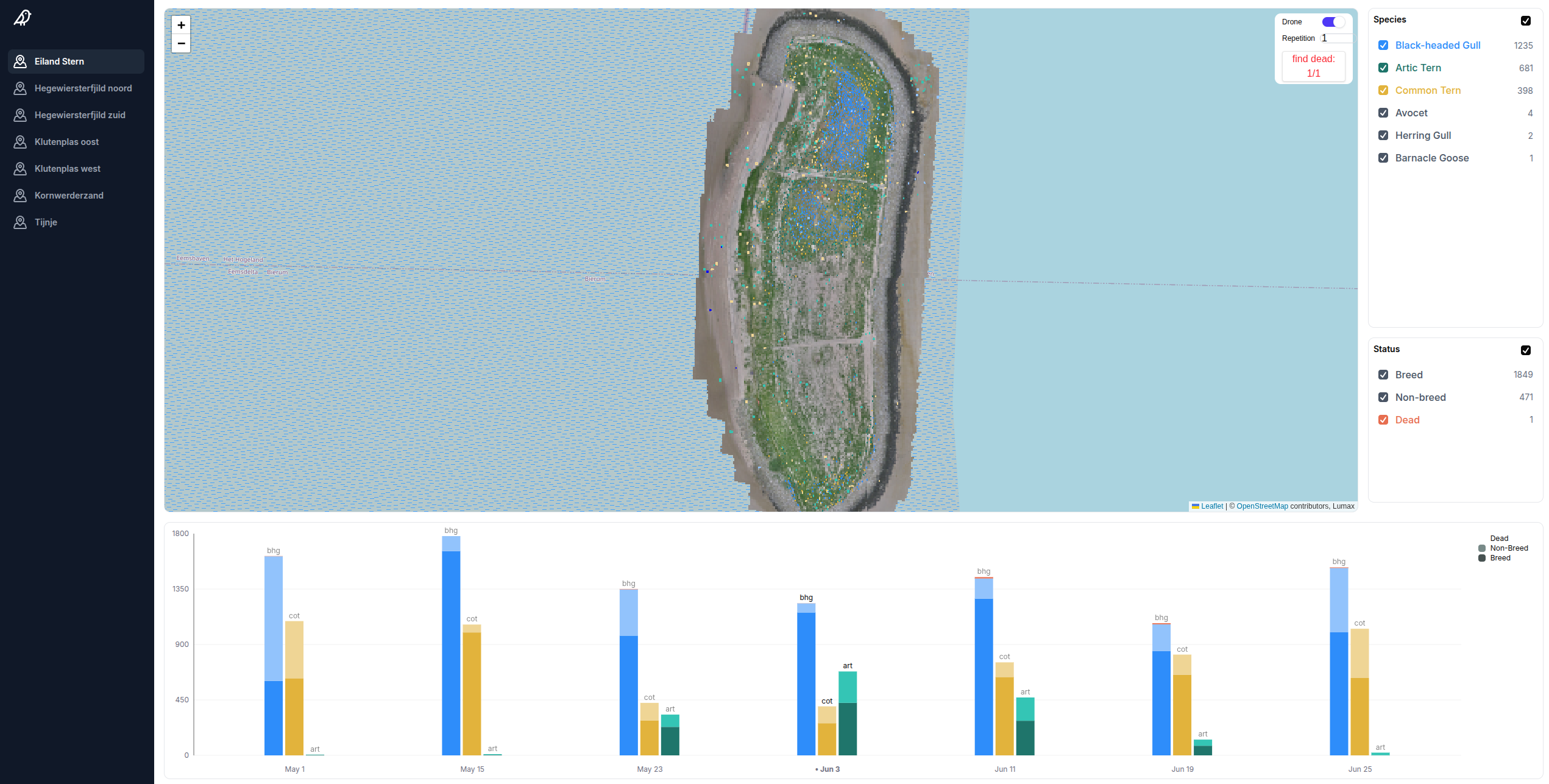
AI-BIRD is a cloud-based platform for efficient monitoring of breeding birds and detection of avian influenza casualties in drone imagery. The platform automatically detects and counts species, identifies nests, and tracks the development of breeding colonies over time. It also includes a dedicated dead bird finder to assess mortality from avian influenza outbreaks.
References
1. Kellenberger, B., Veen, T., Folmer, E. & Tuia, D. (2021). 21 000 birds in 4.5 h: efficient large-scale seabird detection with machine learning